Chilled
Refrigerated food & beverages
Eligible products with written shipping temperatures, packaging, sanitation and handling requirements.

Temperature-controlled road freight
Coordinate eligible chilled, frozen and protect-from-freeze freight across Canada and the United States. The product specification, set point, acceptable range, equipment, loading process, monitoring needs and receiving handoff are reviewed before booking.
A practical answer
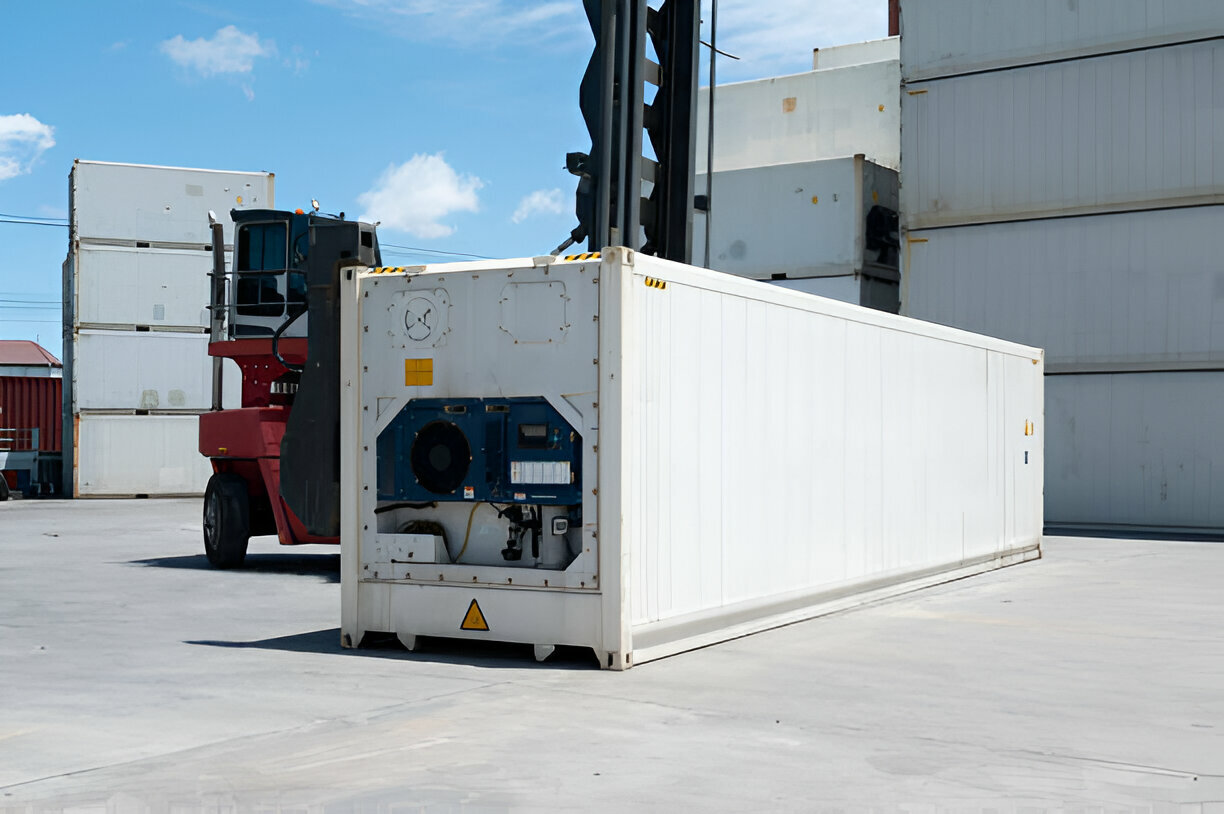
Reefer services use insulated road equipment with an active refrigeration unit to maintain specified transportation conditions for eligible temperature-sensitive freight. A workable plan connects the product’s written temperature requirements to suitable equipment, loading, airflow, monitoring, route, timing and receiving procedures.
A reefer trailer is primarily transportation equipment—not a substitute for product preparation or a blast-freezing process. Unless a validated shipment plan states otherwise, the product should be tendered at the required shipping temperature.
Where reefer equipment may fit
These examples are planning categories, not automatic acceptance. Temperature, sanitation, packaging, compatibility, equipment and regulatory requirements must be confirmed for each shipment.
Eligible products with written shipping temperatures, packaging, sanitation and handling requirements.
Eligible frozen products requiring a defined set point, prepared product temperature and controlled handoffs.
Eligible products needing active temperature protection during cold-weather transportation.
Eligible products with commodity-specific temperature, ventilation, humidity, airflow or handling instructions.
Requests reviewed against approved labelling, qualified packaging, equipment, monitoring and written quality procedures.
Eligible non-food products with documented ranges, packaging, compatibility and regulatory requirements.
Choose the equipment
Both are enclosed trailers, but only reefer equipment actively manages temperature. The product specification—not the season or the lowest rate—should determine the appropriate option.
An outdoor temperature forecast does not replace the product’s documented shipping requirements. Confirm active refrigeration, insulation, packaging and monitoring needs with the responsible product owner.
Before equipment is sourced
A reefer quote needs more than a commodity and two postal codes. Written product, temperature, loading, monitoring and receiving requirements help identify potentially suitable capacity.
Describe the exact product, packaging, lot or handling unit and known restrictions.
Provide the required operating set point, permitted range and any do-not-freeze limit.
State the expected temperature at tender and who verifies it before loading.
Provide pieces, pallets, dimensions, total weight, stackability and pallet pattern.
Define pre-cooling, loading time, dock conditions, airflow clearance and operating mode.
Specify logger, sensor, continuous record, alert, download and calibration requirements.
Include complete facilities, contacts, readiness, appointments and receiving storage.
Identify written procedures, documents, broker contacts and who decides after an excursion.
Pickup and receiving readiness
Trailer capability alone does not control the complete movement. Product preparation, loading exposure, airflow, door openings, monitoring and prompt transfer to receiving storage all affect the shipment plan.
Communicate the approved set point, acceptable range, operating mode and special restrictions.
Confirm packaging and product temperature before tender rather than relying on the trailer to correct it.
Cleanliness, odour, damage, drainage and prior-load restrictions should match the product requirements.
State whether pre-cooling is required, the target condition and how it will be verified.
Pallet pattern, loading height and clearance should support the confirmed airflow plan.
Coordinate dock readiness, loading time and door openings to limit avoidable exposure.
Verify device placement, data access, alerts and record responsibility before dispatch.
Confirm appointment, inspection, temperature check and prompt transfer to suitable storage.
Shipment workflow
The workflow is designed to resolve temperature, equipment, monitoring and handoff questions before the shipment moves.
Confirm commodity, packaging, quantity, dimensions, weight and product condition.
Record the set point, acceptable range, operating mode and excursion contacts.
Review potentially suitable reefer capacity, compatibility and preparation requirements.
Define location updates, temperature monitoring, alerts and records included in the plan.
Align pre-cooling, trailer inspection, product temperature, loading and documentation.
Coordinate agreed updates, exceptions, receiving checks and proof-of-delivery records.
Temperature-control responsibilities
There is no universal reefer temperature for every commodity. The responsible shipper or product owner should provide the approved conditions, procedures and acceptance criteria. Equipment and monitoring capabilities must then be confirmed for the specific shipment.
The coordinator should not invent a temperature or substitute a generic commodity assumption.
A trailer set point and the product’s actual internal or surface temperature are different measurements.
Pallet pattern, clearance, door exposure and loading practices can affect temperature distribution.
Sensor, logger, alert, download and calibration capabilities vary and must be specified.
A temperature excursion does not by itself determine product acceptance or rejection. The responsible product or quality authority should evaluate the event using the applicable specification, stability information and written procedure.
Common questions
Start with the actual product specification. It determines the temperature, equipment, monitoring, loading and receiving requirements.
A reefer service uses insulated road equipment with an active refrigeration unit to maintain specified transportation conditions for eligible chilled, frozen or protect-from-freeze freight. Suitability depends on the product, packaging, temperature plan, equipment, lane and handling requirements.
Reefer services focus on temperature-controlled transportation equipment and the shipment-level operating plan. Refrigerated logistics is broader and may include capacity strategy, multiple shipment modes, scheduling, visibility, documentation and cold-chain coordination across several handoffs.
A reefer trailer is primarily designed to maintain transportation conditions. Unless a specific, validated plan states otherwise, product should be prepared at the required shipping temperature before loading. Do not assume the trailer can safely or uniformly pull down warm cargo.
Provide the commodity, packaging, pieces or pallets, dimensions, weight, set point, acceptable range, pickup product temperature, operating mode, pre-cooling, loading, monitoring, origin, destination, appointments and documentation requirements.
Potentially, but not under one generic setup. Each request requires the product specification, set point, acceptable range, packaging, equipment capability, operating mode, outside conditions, route and loading process to be reviewed.
No universal monitoring package is stated. Capabilities vary by equipment and carrier. Specify whether you need continuous monitoring, customer access, automated alerts, downloadable reports, independent data loggers, calibration records or other evidence, and confirm what is included before booking.
Only when the product owner’s requirements, equipment configuration, compartment capability, packaging, airflow and cargo compatibility support the plan. Do not assume a single-zone trailer can safely serve different set points.
Eligible requests can be reviewed, but product category alone does not confirm acceptance or compliance. Provide the applicable written temperature, sanitation, packaging, monitoring, qualification, documentation and regulatory requirements so suitable options can be assessed.
Instant Logistics can review eligible temperature-controlled road shipments within Canada and between Canada and the United States. Capacity, equipment, product requirements, appointments, commercial documents, broker contacts and border readiness must be confirmed for the specific load.
No blanket temperature, product-condition or transit-time guarantee is stated. Service depends on correct product preparation, written instructions, equipment, loading, monitoring, capacity, route, appointments, border processing and operating conditions. Any commitment must be confirmed for the specific shipment.
Related logistics services
Use the related pages for broader refrigerated coordination, food and beverage freight, standard enclosed transportation and general road-freight planning.
Start with the product specification
Send the product, packaging, shipment size, set point, acceptable range, pickup temperature, origin, destination, timing, loading instructions and monitoring or documentation requirements.
Important: This page provides general transportation information, not product-specification, food-safety, pharmaceutical-quality, customs, regulatory or legal advice. It does not state blanket pharmaceutical, dangerous-goods, food-grade certification, real-time monitoring or product-condition guarantees. The shipper and responsible product owner must provide the applicable requirements. Service acceptance is subject to product, equipment, lane, timing, regulatory and capacity review.