Industrial machinery
Presses, production lines and large assemblies with concentrated loads or unusual lifting requirements.

Instant Logistics coordinates heavy haul transportation for oversized, overweight and complex project freight across Canada and the United States. Each movement begins with verified cargo data and site conditions, then aligns equipment configuration, axle loading, securement, permits, route feasibility, escorts and shipment communication.
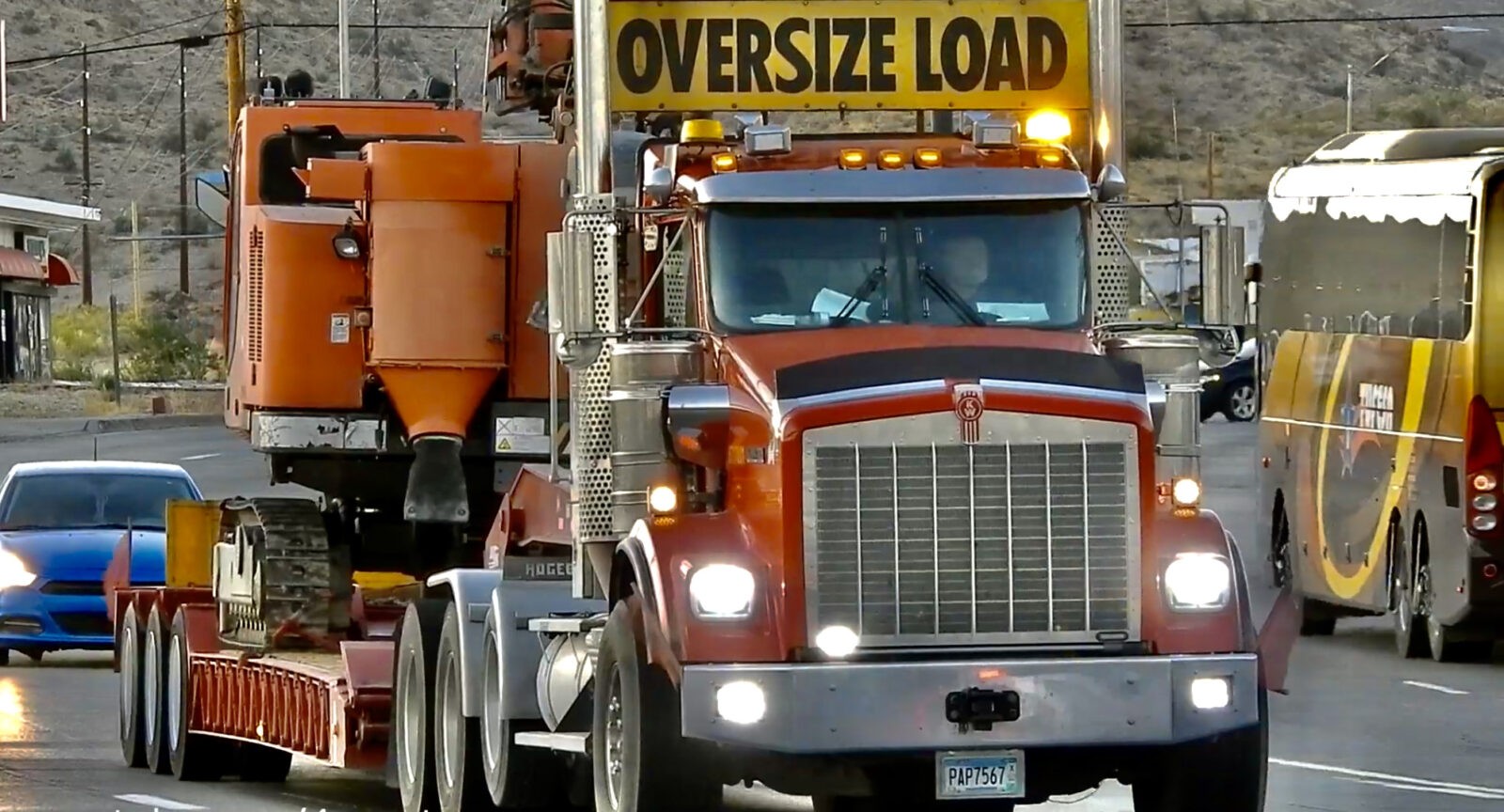
Heavy haul services coordinate freight whose loaded dimensions, weight, geometry, handling or route requirements extend beyond ordinary transportation planning. The work may involve specialized trailers, multi-axle configurations, permit applications, route and bridge review, escort vehicles, restricted travel windows, engineered securement and detailed origin and destination coordination. The applicable requirements are determined by the actual loaded vehicle and every jurisdiction on the route.
Heavy haul is not defined by commodity name alone. An ordinary-looking component can become a specialized movement because of its final shipping dimensions, concentrated weight, centre of gravity, handling method or site access.
Presses, production lines and large assemblies with concentrated loads or unusual lifting requirements.
Eligible cranes, excavators, loaders and attachments requiring equipment and securement review.
Transformers, generators, skids and project components with precise weight distribution and site needs.
Fabricated structures, bridge elements and modules with route, handling and delivery-sequence constraints.
Large components and machinery destined for industrial sites with restricted roads or remote access.
One-off fabricated loads planned from drawings, support points, transport orientation and site conditions.
Rates and feasibility cannot be established responsibly from commodity and total weight alone. Changes to dimensions, loading orientation, axle distribution or route can affect equipment, permits, escorts, timing and final cost.
Transport length, width and height—including packaging, cradles, protrusions and attachments.
Total weight, centre of gravity, concentrated loads, support points and proposed orientation.
Current photographs, dimensioned drawings and manufacturer transport or lifting instructions.
Crane, forklift, drive-on, jack-and-slide or other method, including lifting and securement points.
Ground condition, access road, gates, overhead clearance, staging space and operating windows.
Approach route, turning area, unloading plan, receiving crew, equipment and appointment rules.
Complete addresses, proposed border crossing, target dates, project sequence and site contacts.
Weather protection, monitoring, documentation, escorts, security or stakeholder communication needs.
Equipment names do not guarantee fit or capacity. The actual deck geometry, concentrated-load rating, axle spacing, loaded height, ground clearance, loading method and route must be confirmed for each shipment.
For eligible tall or self-propelled equipment when deck height, ramp angle and loading method align.
Low deckA lower centre well may provide additional vertical room for eligible cargo loaded by a confirmed method.
Tall freightOpen-deck configurations for eligible machinery, materials and components that fit standard capacity profiles.
Open deckFor eligible long, indivisible freight requiring additional deck length and a route-specific movement plan.
Long cargoAxle configurations coordinated according to verified weight distribution, equipment and jurisdictional limits.
Weight planThe movement should advance only after the preceding information is confirmed. Late changes to the load or site can require new equipment, permit amendments, route changes or rescheduling.
Confirm dimensions, weight, balance, transport orientation, photos, drawings and handling instructions.
Review deck geometry, capacity, axle loading, ground clearance, securement and loading method.
Check overhead clearance, bridge and roadway restrictions, construction, turns and local site access.
Coordinate permits, travel windows, routing, escorts, signage and other conditions where applicable.
Confirm equipment, permits, sites, crews, schedule, contacts, communication and delivery plan.
A suitable highway route does not solve a restricted plant entrance, soft ground, tight turn or missing unloading crew. Origin and destination access should be reviewed before equipment is dispatched.
No logistics provider can responsibly promise a universal permit time, automatic approval or unconditional compliance guarantee before reviewing the loaded configuration and route. Heavy haul planning must follow the permit conditions, cargo-securement rules and operating requirements that apply to the actual movement.
Instant Logistics coordinates eligible heavy haul and specialized project freight within Canada and between Canadian and U.S. origins and destinations. The plan can include equipment sourcing, carrier coordination, permit and escort communication, pickup scheduling, border-ready information, tracking and delivery updates.
Accurate cargo and site information reduces avoidable changes. Equipment, permits, routing, escorts, timing and price can all change when the loaded configuration changes.
Provide exact loaded length, width, height and weight, centre of gravity, support points, current photographs, dimensioned drawings, transport orientation, loading and unloading methods, complete addresses, site restrictions, target dates and any securement, monitoring or documentation requirements.
A load becomes oversized or overweight when the complete loaded vehicle exceeds an applicable legal dimension or weight limit. Thresholds and conditions vary by province, state, route and local authority, so the actual configuration must be reviewed.
Equipment is matched to cargo dimensions, weight distribution, centre of gravity, deck geometry, axle configuration, ground clearance, loading method, route, site access and permit requirements. A generic trailer name does not confirm suitability.
There is no universal permit timeline. Processing depends on the jurisdictions, loaded dimensions and axle weights, route complexity, bridge or engineering review, escorts, requested travel date and whether the submitted information is complete.
No. Escort requirements depend on the loaded dimensions, route, jurisdiction, permit conditions and operating time. The applicable authorities determine when pilot cars, police escorts or other support are required.
Yes. Instant Logistics coordinates eligible heavy haul freight between Canada and the United States. Capacity, permits, customs responsibilities, route feasibility, insurance, site access and shipment information must be reviewed for the specific movement.
Tracking and communication capabilities depend on the carrier, equipment and movement plan. State the required reporting, contacts, update frequency and documentation before booking so the available option can be confirmed.
Send the cargo drawing, verified dimensions, weight, loading method, site conditions, lane and target dates. Instant Logistics will review the information and coordinate an appropriate heavy haul option.
Prefer to speak with the team? Call +1 226-289-1414 or email Customerservice@instantlogistics.ca.